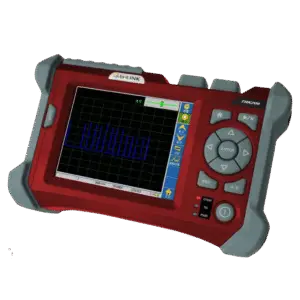
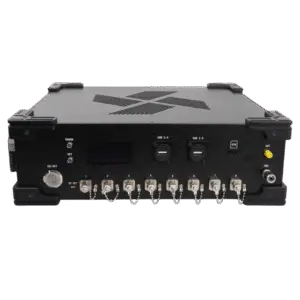
Bridge the Gap Between “Distance” and “Location” Traditional OTDRs tell you the fault is “10km away,” but they can’t tell you exactly where that point lies in a complex underground pipeline or overhead span. The G-Link TF500D Optical Cable Fault Tracer is designed to solve this critical “last-mile” problem. It serves as the ultimate complement to OTDRs, allowing maintenance teams to pinpoint the physical breakdown point quickly.
How It Works Utilizing advanced photoelastic principles and optical interference, the TF500D detects specific mechanical vibrations applied to the cable (via knocking or slight bending). By communicating between the central office unit and the field engineer, the device confirms the target cable and narrows down the fault location step-by-step. This process is completely non-destructive, meaning you don’t need to open splice closures or cut cables to verify you are working on the right line.
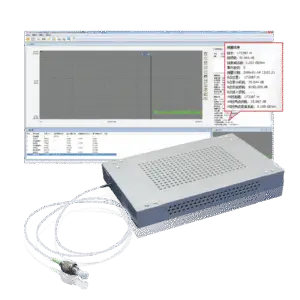
A Complete Maintenance Workstation The TF500D is more than just a tracer. It integrates a fully functional OTDR module (1310/1550nm, 35dB dynamic range) for curve analysis. Whether you need to conduct a resource census of messy manholes, identify a specific fiber in a bundle, or rush to an emergency break, the TF500D reduces workload and improves safety by minimizing the need for dangerous well operations.
A. Fault Tracing & Identification Specs
| Parameter | Specification | Note |
|---|---|---|
| Max Tracing Distance | 50 km | For Fault Tracing |
| Max Census Distance | 100 km | For Cable Identification |
| Positioning Accuracy | ± 10 m | Pinpoint precision |
| Tracing Blind Zone | 40 m | Near-end invalid zone |
| Operation Mode | Touchscreen + Buttons | Dual control |
| Output Mode | Audio + Visual (ECG/Bar Graph) | |
| Wavelength | 1550 nm | For Tracing/Census |
| Optical Connector | FC/APC | Required for Tracing port |
B. OTDR Module Specs
| Parameter | Specification |
|---|---|
| Wavelength | 1310 / 1550 nm |
| Dynamic Range | 35 dB |
| Event Dead Zone | 2.5 m |
| Attenuation Dead Zone | 15 m |
| Data Storage | SD Card (4G), >10,000 traces |
| Connector | FC/UPC (Interchangeable SC/ST) |
C. General Specs
| Parameter | Specification |
|---|---|
| Display | 5.6-inch Touch Screen |
| Battery | Dual Lithium (7.4V 8.4Ah), ≥10 Hours |
| Dimensions / Weight | 65 x 150 x 235 mm / 1.5 kg |
Emergency Fiber Repair: Rapidly locating break points to restore critical services.
Resource Census: Identifying and tagging cables in crowded manholes or shared ducts.
Cable Cutover: Verifying the correct target cable before cutting to prevent accidental service interruption.
Network Acceptance: Verifying route data and link quality with the built-in OTDR.
Standard Package Includes:
| Item | Description | Qty |
|---|---|---|
| Main Unit | TF500D Host (with Stylus & Battery) | 1 |
| Power | 12V/3A Power Adapter | 1 |
| Storage | 16G SD Card + Card Reader | 1 |
| Cables | FC/UPC-FC/UPC Patch Cord (5m)FC/UPC-FC/APC Patch Cord (5m) | 11 |
| Accessories | Audio Headset (for monitoring) | 1 |
| Tools | Knocking Rod (for vibration signal) | 1 |
| Carrying | Soft Bag & Strap | 1 |
| Documents | User Manual, Calib. Cert, Warranty Card | 1 |
Frequently Asked Questions (FAQ)
A standard OTDR tells you the distance to a fault (e.g., "break at 10.5km"), but not where that point physically is. The TF500D Optical Cable Fault Tracer uses vibration detection to guide you to the exact physical location (e.g., "the break is under this specific manhole") with ±10m accuracy.
No. The TF500D uses non-destructive optical interference technology. You only need to connect one end of the fiber to the device. The detection is done by gently knocking or bending the cable at the remote site, which is safe for the cable structure.
No. The manual specifies that the fiber under test must not have working light (Dark Fiber). Testing on live fibers can damage the sensitive optical detectors and interfere with network traffic.
The Tracing/Identification port uses FC/APC (Angled) connectors to minimize back-reflection and increase sensitivity for vibration detection. The OTDR port uses standard FC/UPC connectors for general loss measurement. Be careful to connect the correct patch cord to the correct port.